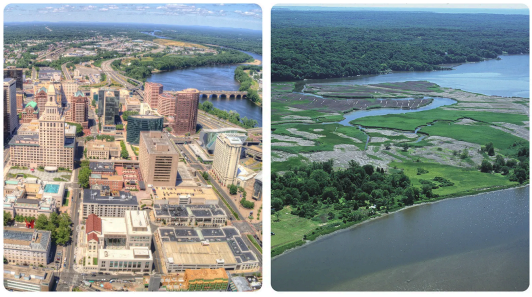
Neglect of rural populations is frequently attributed to globalization. But treating globalization as the sole culprit averts attention from deeper policy failures that have widened spatial schisms within countries. This blog reviews The Urban-Rural Gap and Dilemma of Governance by Anirudh Krishna on that issue.
In the paper, Krishna argues that the divide in today’s developing world is no longer between countries but within countries. It’s spatial. Wealth, opportunity, and political influence are concentrated through the process of urban agglomeration with burgeoning metropolitan elites while rural areas stagnate in the backyards. Fast-growing economies such as China, India, Indonesia and South Africa now contain both the global elites and global poor. While the large population remains poor as those in the world’s least developed countries, a small share of the population in these countries has joined the world’s richest 10 per cent.
Krishna rejects the idea that rural poverty is a residue of underdevelopment that will disappear with growth. He shows that poverty rates are consistently higher in rural areas. For instance, in Malawi, 57 per cent of the rural population lives below the poverty line, compared with 17 per cent of urban residents. In Zambia, the figures are 78 per cent rural versus 28 per cent urban; in Vietnam, it’s 22 per cent versus five per cent in rural and urban areas, respectively.
Access to basic services follows that suit. In Ethiopia, 97 per cent of urban residents have access to improved drinking water, compared with only 42 per cent of rural residents. In India, 60 per cent of city residents have improved sanitation facilities versus 25 per cent in rural areas. Moreover, gaps in education attainments are severely unequal. In Pakistan, 61 per cent of urban residents complete secondary education, compared with half of that figure for rural residents. Even when years of schooling are similar, learning outcomes are poorer in rural schools, locking rural populations out of the skilled jobs demanded by globalized economies.
According to Krishna, this results in a governance dilemma: whether to prioritize marginal rural households or globally competitive households in capital cities. In theory, democratic systems should balance both. However, not in practice. Despite making up a small proportion of the total population, urban elites’ preferences shape policy priorities, public investment decisions, and national development narratives. While the government builds airports, information superhighways and elite universities in urban centres, rural schools, clinics and roads remain underfunded and are in infrastructural squalor. These results in rural populations locked into informal, insecure and sometimes sordid forms of work. Fewer than 10 per cent of households in India hold formal jobs with legal protections. Similar patterns are seen across much of Asia, Africa and Latin America.
An interesting point Krishna raised is that when formal economic mobility is blocked, control of the state becomes the most reliable route to wealth. I can’t help but think of my own country. Ask any PNGeans about their future aspirations, and it will be to become politicians. Sadly, Krishna links this dynamic to corruption, elite capture and resistance to democratic accountability—this could help explain why extreme inequality often coincides with political instability.
Moreover, Krishna argues that urban-led growth maximizes the short-term returns but undermines long-term social cohesion and legitimacy. He thinks migration is not the solution. Asking people to move so that the government can provide services more cheaply is not efficient. It’s a policy failure. While persuasive on equity grounds, I disagree with that idea as it underplays fiscal realities. To sustain national parity in services provision, people should be moved from the low-productivity agriculture sector to the high-productivity industrial sector in urban areas instead.
Yet three of five points Krisna envisages to address the rural-urban divide are worth noting. First, he argues that having a minimum living standard should be non-negotiable for all citizens. Access to basic nutrition, housing, education and health should not depend on where someone lives. China’s rural health insurance, free education and minimum income guarantee show that scale is not an excuse. Second, equality of opportunity must replace trickle-down thinking. This requires serious investment in rural education. And third, democracy must embrace genuine local governance. Local control over schools, clinics, and infrastructure is essential if rural citizens are to matter politically.
In sum, Krishna shows that deepening urban-rural divides are not accidents of markets. They are result of policy choices. And unless those choices change, growth will continue to produce prosperity for few and exclusion for the many. Papua New Guinea stands as a strong case, given over 85 per cent of its population are still locked in rural areas. Crafting policies that allow smooth transition from the low-returns agrarian sector into the high-returns industrial sector should be a longer-term priority.
Ref:
(1) Featured image is taken from Britannica.
 Lanesia Knots
Leave a comment