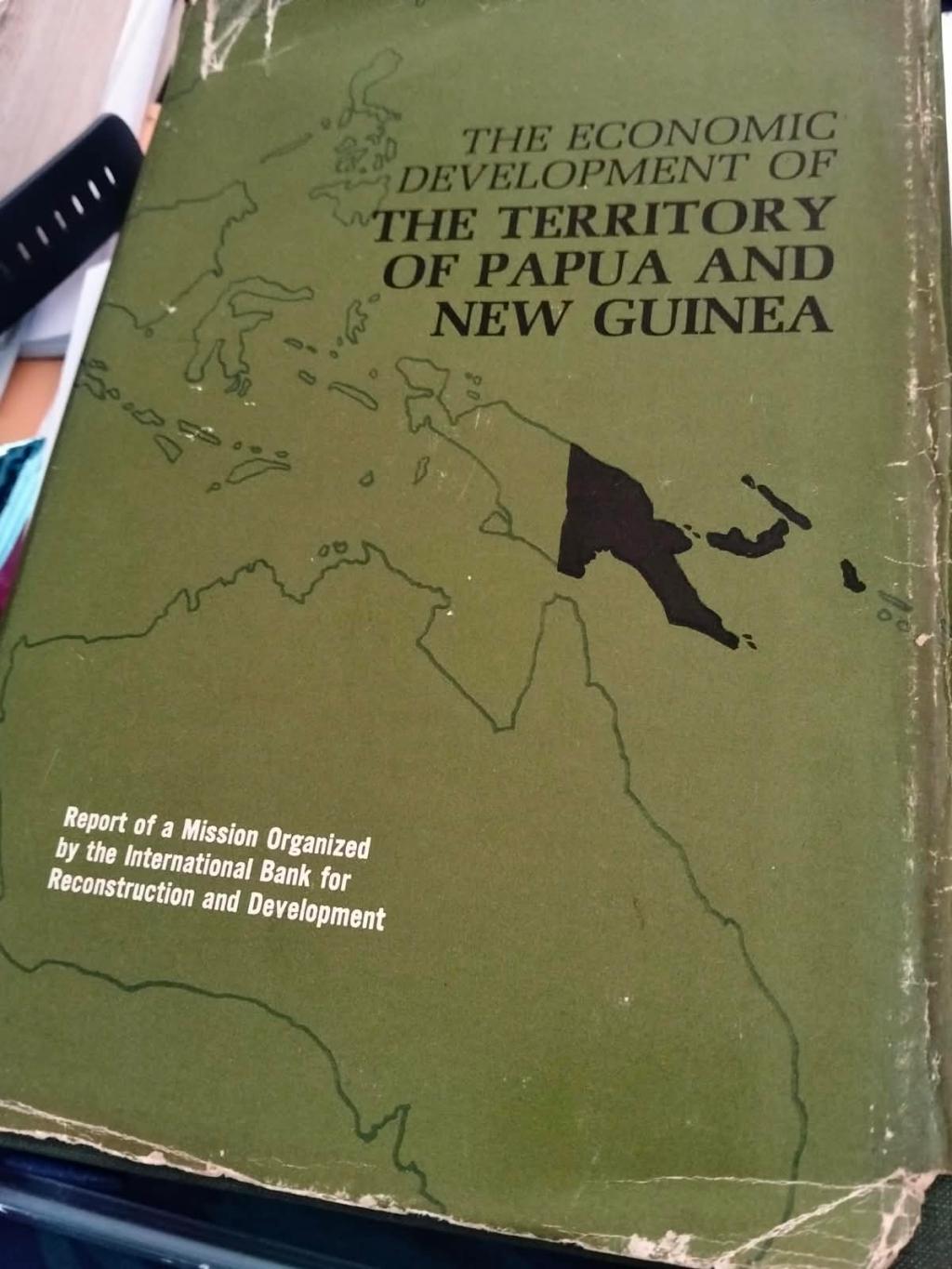
This is the first blog in a series of eight blogs revisiting PNG’s pre-independence economic development based on the book, The Economic Development of the Territory of Papua and New Guinea, published in 1965 by World Bank. The book has eight chapters, and this series of blogs captures key points in each chapter. This first part introduced the setting. Note that, in the book, some data went as far as early 1920s but scanty details about the economy were provided for those periods, thus, the analysis revolves around available information in 1950s and 1960s.
During those times, just like these days, PNG’s economy was mostly subsistence. In 1962/63, subsistence production was valued at about 91 million Australian pounds (£A). The entire monetary economy produced about £A55 million. These were rough estimates, but it clearly show that the economy that feeds most people was larger than the one that pays them. But it wasn’t stagnant.
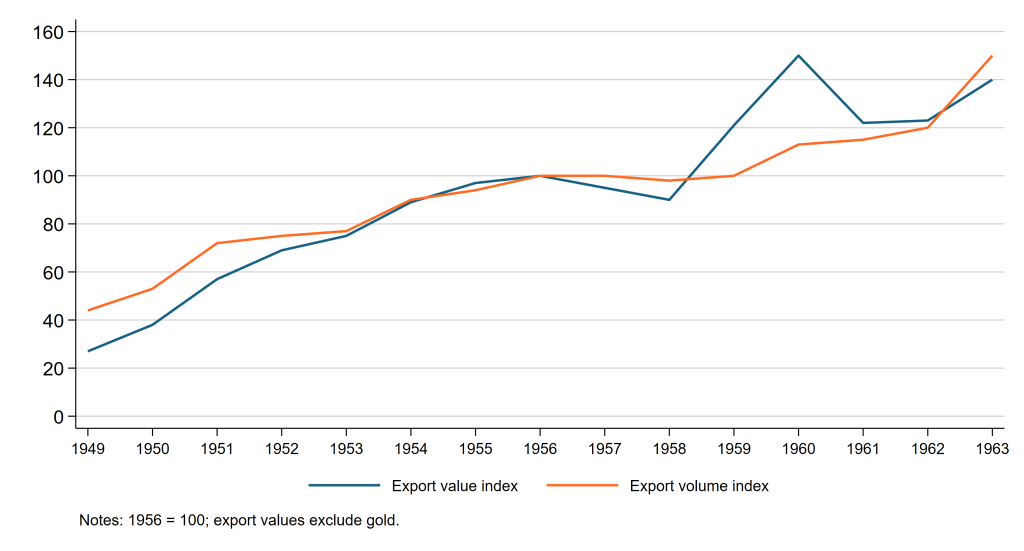
The Territory’s cash economy was rapidly expanding. Its GDP rose from about £A15 million in 1950/51 to £A55 million in 1962/63, measured in current prices (Figure 1). Agricultural exports were diversifying (Figure 2a and 2b), businesses were opening, and government services were spreading. But most indigenous people continued to make their livelihoods outside wage employment. Only 4 percent were wage workers and fewer than 2.5 percent lived in towns.
Figure 1: GDP at Market Prices (1950-1963)
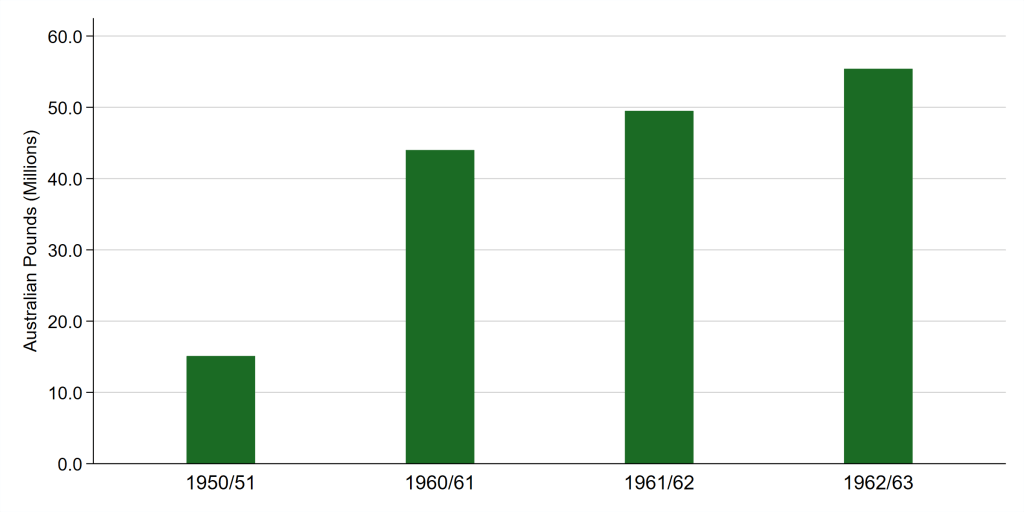
Figure 2a: Relative share of gold and agricultural products in total exports (1921-1960)
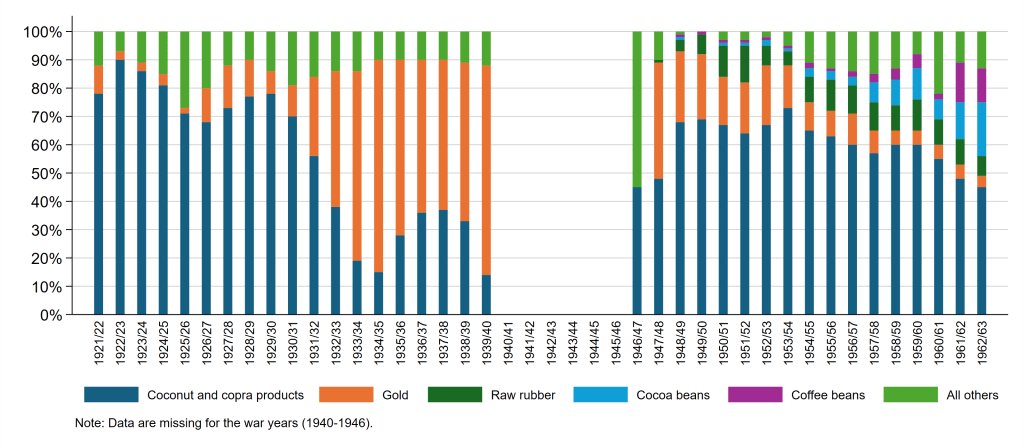
Figure 2b: Value and Volume of Major Exports Index (1949-1963)
For most families, economic security rested on gardens, fishing, housing and reciprocal obligations within their communities. Village households were sustaining the population and supplying labour for community works. Their contribution belongs at the centre of the development story.
The main force behind the postwar expansion of the money economy was government spending. By 1962/63, total public expenditure exceeded £A35 million, while export earnings were little more than £A16 million. Australian grants and direct Commonwealth expenditure financed about 71 percent of public spending. And the gap between expenditure and locally raised revenue widens as the economy grew.
The spending expands health services, education and communications. It also supports a costly administration whose senior positions were overwhelmingly filled by expatriates. Salaries and benefits had to attract workers from Australia. Staff housing alone absorbed almost a quarter of public investment over the quinquennium. The expanding government stimulates demand without producing a corresponding increase in the Territory’s capacity to finance its government.
Education helps explain the problem. At the time of writing the book, there were fewer than 100 indigenous people who had completed a full secondary education, and none had completed a university education. Such a narrow pool of qualified local staff made reliance on expatriates predictable. This also shows how little advanced education had reached the people who are being prepared to govern their own country in mid next decade.
The earnings gap was substantial. In 1962/63, indigenous employees earned an estimated average of £A160 a year, including income paid in kind. Non-indigenous workers averaged £A1,800, more than eleven times as much. Occupations and qualifications accounted for part of the difference. Expatriates’ pay followed Australian labour market conditions, while indigenous pay reflected local conditions. Rapid aggregate growth offered very different rewards to different workers.
Nevertheless, local producers were expanding their place in the market economy. By 1962, indigenous growers controlled about 60 percent of the acreage planted to coffee and more than 40 percent of production. Their marketed copra output had almost tripled since 1950. Much of this expansion occurred with very little development credit. Village gardens provided food while tree crops matured, sustaining and allowing households to invest labour into new crops before the new crops generated cash.
That experience complicates the report’s treatment of customary institutions. Communal landholding made conventional bank security difficult, but access to land and family support also helped sustain livelihoods and investment. If a development policy concerns only with turning land into collateral, it could overlook those functions. That motivates the question of “how could finance support local enterprise while preserving the security on which households relied?“
Geography was another constraint. The Territory had disconnected road systems, widely separated markets and inadequate capacity in several major ports. The chapter’s descriptions of mountains and islands provide a direct economic meaning. The natural resources earning opportunities can be realised when production and transport costs permit. It wasn’t in many of the cases.
Local political institutions were developing too. By mid-1963, 77 local government councils covered about 700,000 people. They built or maintained roads, schools, markets and water supplies; some operated cocoa fermentaries. The new House of Assembly that got established in 1964 widened elected representation. These developments show Papua New Guineans acquiring practical experience in organising investment and exercising public authority, even while ultimate control remained with Australia.
In sum, this first chapter of the book, shows that the Territory was already producing, trading and changing. It also shows how restricted access to education, finance and senior employment limited the share of the cash economy available to its people. Growth was already underway before independence. The harder task was widening access to its rewards. The second part of the series will look into “The Program for Economic Development”, which is chapter 2 of the book.


Leave a Reply