By Luke McKenzie
When they were inviting names for the new PNG NRL team, I suggested “PNG Dreamers”. I think, the great Melanesian philosopher, Bernard Narokobi (1943-2010) would have agreed. He saw dreaming not as an idle pastime but as a core part of the Melanesian identity and the first step to improving Papua New Guinean’s wellbeing. He concludes his marvellous book “Life and Leadership in Melanesia” with the assessment, “There is a better Melanesia awaiting you than what I see. That is the Melanesia for those who dream dreams and take steps to transform dreams into reality.”
Published in 1983, nearly every page seems relevant today. Narokobi integrates Melanesian and Christian values to face a contested, technologically-advancing world. He calls for leaders to show integrity in putting national interests above personal ones. His concerns could be taken from yesterday’s copy of the Post-Courier or The National: the impact of foreign companies and advisers, emotion-driven decision making, hypocrisy in the church, alienation of elderly people in the village, tribal fighting, crime, and an inferiority mindset. He calls for Melanesians to take responsibility and initiative. Narokobi explains where PNG has come from, where it can go, and how to do so. It is the clearest exposition of a Melanesian worldview that I have read. Often using allegory, his writing is observant, proud and holistic.
Throughout the book, Narokobi emphasises the rich inheritance of Melanesian values and ways. This includes the wantok system, family cohesion and interdependence. He also celebrates collective responsibility, faith and village life. He wisely acknowledges failings of the individualistic, consumerist and often illiberal Western worldview. He explains how the “big man” custom has been perverted. In times gone by, wealth consisted of perishable foodstuffs that would rot if not distributed to other families. Now individuals can hoard wealth in overseas bank accounts and investments. So, leaders distribute benefits from public resources and institutions instead. He calls for people to be driven by “sacrifice, simplicity and humility” and a strong Leadership Code and Ombudsman Commission to mitigate this. He acknowledges that in Melanesian tradition, sharing and care were limited to the clan, tribe, or family. Whereas the Christian faith calls its followers to love their enemies. Narokobi suggests that “freedom and development come when leaders side with the poorest and most compromised.”
Alongside John Momis, Narokobi led the drafting of the PNG Constitution’s goals and directive principles. The last portion of the book is an explanation of the five goals, which were inspired by liberation theology. The goals are Integral human development; Equality and participation; National sovereignty and self-reliance; Natural resources and environment; and Papua New Guinean ways. I couldn’t help but think how much the Western “development” sector and economics profession have had to learn from this holistic way of thinking. The three standard cross-cutting themes in development are now climate (seen in Goal 4); gender equality, disability and social inclusion (Goal 2); and local leadership/ownership (Goals 3 and 5). Even so, outsiders can be reluctant to promote these themes in ways that are recognisable to Melanesians.
Narokobi went on to serve three terms as Member for Wewak (1987-2002). I sense that he struggled to convince his peers to be so thoroughly guided by the Constitution and the Bible to improve PNG’s circumstances. As such, it will be left to a new generation to continue his advocacy – in and outside of Parliament. However, all who follow in his footsteps must be reminded by Narokobi’s view that hope is ultimately only found in Jesus Christ.
My main complaint about the book is that it is too short. For example, I would have loved more detail on his story of how the national goals were nearly cut from the Constitution. Thankfully, Narokobi was a prolific author and my wife has already bought me a copy of “Foundations of Nationhood”. I hope others can continue to find his writings as edifying as I did.
About the author: Luke McKenzie is an Australian economist who has worked in Port Moresby, Papua New Guinea, for almost four years and has travelled to most of the country’s provinces.
Reference.
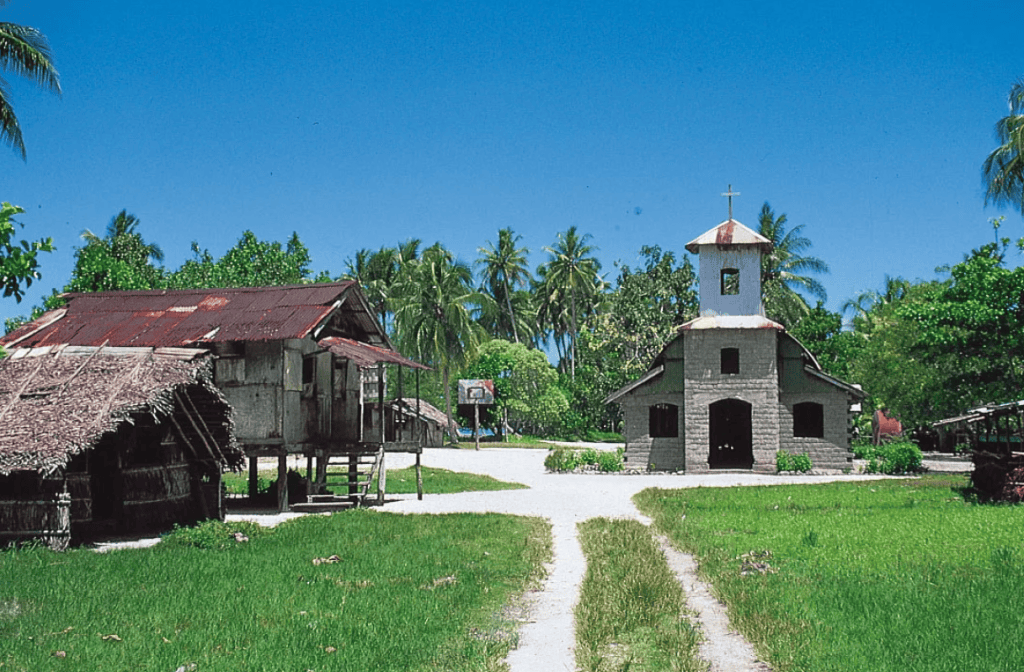
(1) Featured image is taken from; https://www.britannica.com/place/Melanesia. The image shows a church near Lorengau, Manus Island in Papua New Guinea.


Leave a Reply